Growing Up in a Segregated Southern Town

by David Billiongs
It was a much smaller world back then. I remember the first time I saw Ken Hatfield’s letter jacket. Along the sleeve it listed his accomplishments: “All district, all region, all state, all American.” I remember stopping at that last one—All American. I thought to myself, My goodness, how does someone become an All American? That jacket represented a larger world than the one I knew, a place where something extraordinary was possible. Ken Hatfield was the first person who made me realize that.
The town was very segregated, and Ken was hero-worshipped by the white community because of his athletic accomplishments, from junior high all the way through college at the University of Arkansas. His achievements were talked about constantly. I even remember a moment when he came over to our house—I'm not exactly sure why—and just having him standing there in the living room left my father visibly struck by his presence. My dad didn’t usually keep up with sports like that, but Ken Hatfield was different. His presence alone carried weight.

That letter jacket became, for me, a symbol of being introduced to a bigger world. Helena was my entire universe at the time, but it was really just a small dot in a much larger context. I will always remember that. I followed Ken Hatfield’s career for years—when he became head coach at the U.S. Military Academy, then at Clemson, and later at the University of Arkansas. He was incredibly accomplished, and even now, decades later, he still holds a place in my imagination.
Ken would be in his early or mid-eighties now. He’s retired and living in a small town outside Fayetteville, Arkansas. People still remember him, especially for one legendary moment. I remember we were all at the Legion Hut for a high school dance, and at the same time a football game against the University of Texas was being broadcast over the radio. Ken received a punt and ran it back eighty yards for a touchdown. You could have heard a pin drop in that room. That moment just added to the mystique of Ken Hatfield. That sense of awe has stayed with me throughout my life, and I’ve thought more than once about reaching out to him, just to tell him how much he meant to me. I think he would appreciate that.
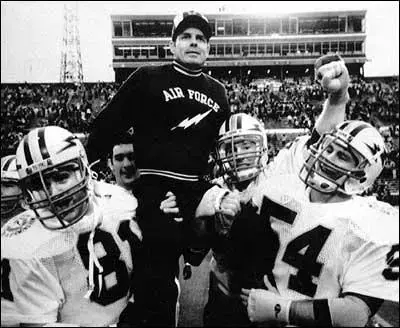
Ken wasn’t just a football player. He played everything. His class nearly won the state championship in football. They went to the College World Series in baseball. He was a standout hurdler in track and field. He was a true all-around athlete. Following a class like that was impossible. We knew we couldn’t live up to it. Somewhat affectionately—and because it was true—our class motto became, “Give us a break.”
We did have basketball, though it wasn’t our strongest sport. Still, during that period, the athletes were so extraordinary that they went all the way to the state finals. We all left school and drove to Little Rock to see it. They weren’t even supposed to be competitive, but they were just that good.

Race, of course, was always present, even when it wasn’t spoken aloud. There were classmates I could—and later did—talk with about race and racism, even years afterward. But one memory stands out clearly. After the football team lost a game, I was walking out of the stadium. Black people weren’t allowed in the stands, but they were permitted to stand around the stadium. As I passed by, a Black man called out, “Y’all need Willie J.”
Willie J. Ross was a great running back at the segregated Black high school and later went on to play for the University of Nebraska. I remember thinking, even then, how true that was. What might it have been like to have a backfield made up of Ken Hatfield, Willie J. Ross, Billy Gray, and Kay Kayser King? I realized later that King’s initials spelled KKK—something that said everything about the environment we were living in.
That was the world I grew up in. And it made me deeply conscious, then and ever since, of the role race plays in every facet of life.

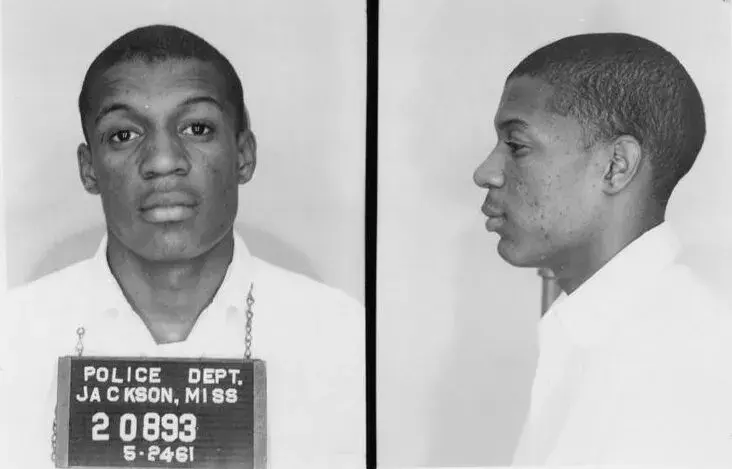

Great blog, David - I'm glad to see that you are doing more of these! I liked Ken's presence and aura, but I was always more drawn to Bill Gray, since he and I were on the same Little League baseball team, coached by his dad. And, Bill recently died, and it brought back all these thoughts. But, they were quite a powerful sports group. I also remember when Ken recruited us for FCA, and we had a photo in the Helena World at his or your house. And, there is a way to get a message to Ken - I have texted that to you. Peace and love, Nibs