New Beginnings, Early Activities: Pushing my Boundaries

by David Billings
When I think about the first time I knowingly pushed back against authority, I go all the way back to Arkansas Boys State in 1963. It was held outside Little Rock, and I was a junior in high school. Boys State programs existed all over the country. You didn’t just sign up—you had to be nominated by your high school—so it was considered an honor.
It functioned like a camp. We were there for about a week, doing outdoor activities alongside a steady diet of speeches about patriotism, citizenship, and leadership. The purpose was to cultivate a future leadership class. At the time, I fit the profile. I was an athlete, involved in student council, part of the in-crowd. People assumed I’d grow into someone who would “contribute.”
What I didn’t realize then was how formative that week would be.
It turns out that Bill Clinton was also at Arkansas Boys State that same year, though I didn’t know him at the time. I only learned that later, when he became president and photographs surfaced of him wearing a Boys Nation 1963 T-shirt. To be selected for Boys Nation, you first had to attend State, and then two young men from each Boys state were chosen. Clinton was one of them. His future Secretary of State, Mack McLarty, was there too. I remember seeing one of them (actually it was Mack McLarty) and thinking, “That guy’s going to be president someday.” There was something about him—an ease with people, a charisma.

At Boys State, I didn’t yet think of myself as political. I knew I wasn’t a proponent of segregation, though I couldn’t have articulated why in the way I can now. Racist language wasn’t part of me. My mother had taught me that people cursed when they didn’t have enough vocabulary, so I didn’t curse either. Those things mattered in shaping how I saw the world.
Every day at Boys State there was a keynote speaker in a large auditorium. This was right after the Cuban Missile Crisis, and by the third day I’d had enough. The speakers were whipping us up with talk about patriotism and duty, even floating the idea—absurd as it sounds now—that we might someday form a cadre of young men to “liberate” Cuba. We didn’t know where Cuba was, beyond “somewhere in the Caribbean,” and we certainly weren’t about to march off from Arkansas without our parents’ permission to invade another country.
These weren’t fellow teenagers talking. They were adults—likely veterans or affiliated with patriotic organizations—pushing a very specific agenda. And that’s when something clicked for me. I realized the intent wasn’t simply to create good citizens, but to shape a certain kind of citizen. A compliant one. A segregated one.
So I resisted in the only way I could think of at the time.
I told my cabin mates to tie me to a chair and make it impossible for me to get loose before the noon lecture. They did. I missed the speech. I remember lying there afterward, briefly wondering if they were ever coming back to untie me. But I didn’t regret it. That moment, strange as it sounds, was my first act of political resistance.
There were repercussions. Older student leaders—college-aged supervisors—confronted me. They said this kind of behavior was unacceptable, that leadership meant learning to sit through things you disagreed with. I understood their point, but I also knew I was pushing back against something unjust, even if I couldn’t fully name it yet.
Looking back, I’m certain there were others like me at Boys State—young men who weren’t buying into the jingoistic, pro-imperialist rhetoric. Clinton and McLarty were examples. We didn’t have the language then, but we knew what we didn’t want to become.
Around that same time, I read the first “serious” book of my life: Another Country by James Baldwin. I developed a habit of writing my thoughts in the flyleaf of books that expanded my worldview, and I did that with Baldwin. Months later—maybe a year—I discovered that my father had written a response to my comments in the back of the book.
He didn’t confront me about it. He didn’t argue with me. He simply wrote his thoughts and left them there for me to find.
That act taught me something profound. My father was a product of the white South. He believed many of the things most white Southerners believed at the time. But he wasn’t mean-spirited, and he didn’t try to confine me to his worldview. His response was reasoned, not angry. He acknowledged Baldwin—whose work he didn’t know —as someone in the Black tradition, and then laid out his own defense of how white people had historically led the country.

What struck me most was the humility of it. He didn’t insist I agree with him. In his own way, he was allowing me room to think. For example, in 1963 he gave me permission to go to New York to work at a church in Brooklyn because he wanted me to experience a larger world. My mother, deeply faith-grounded, always counseled patience and understanding. Between them, I learned that resistance mattered—but so did relationship.
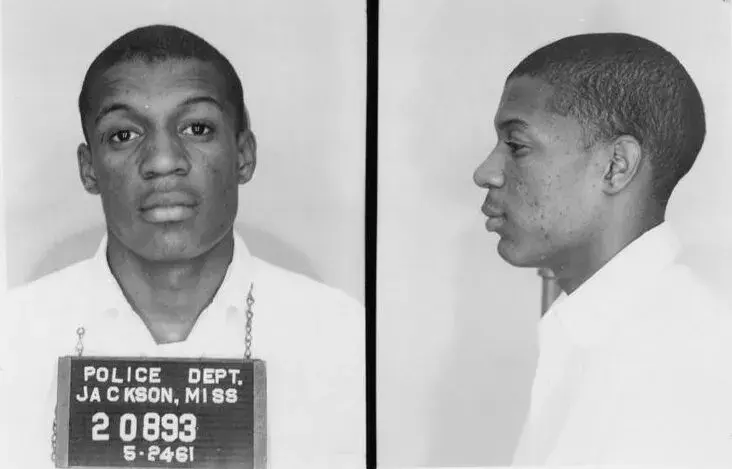
When I was later arrested for possession of stolen yearbooks—books that weren’t mine but were in my car—that charge was used to curtail what Mississippi authorities viewed as my emerging radicalism. I was found guilty on three counts of capital grand larceny and was sentenced to ten years on each count. Each sentence was suspended. That meant the punishment never went away—it hovered.
I was ordered to leave Mississippi for two years, fined heavily, and warned that the sentence could be reinstated at any time. I laid low. I left the state, returned quietly to see family, and avoided further trouble.
But by then, the path was set.
I had learned that you could resist—and that there was a price. I had learned that I could persuade, organize, and act, even if I didn’t yet have the language for it. And I had learned that the forces trying to contain you often reveal themselves most clearly when you refuse to comply.
Arkansas Boys State, 1963—that’s where it began.


Comments