Jerome Smith Stories & Reflection

by David Billings
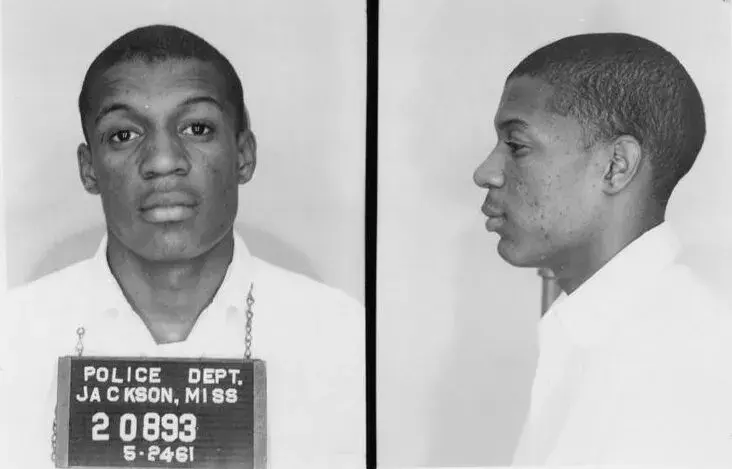
The Olympics had just finished, and I watched some of them on television. The Olympics are always fascinating to me. Any time someone is at the very height of whatever you call it—their craft, their ambition, their artistry—it’s something close to genius to watch. When a human being reaches that level, there’s a kind of brilliance in it. It reminds you what people are capable of.
Watching the Olympics recently made me think about another kind of greatness—people whose achievements don’t come with medals, people who choose not to become famous, even when they could have.
That brought me to Jerome Smith.
I’ve been trying to find him again, and it frustrates me that I haven’t been able to. Jerome Smith worked with the Congress of Racial Equality—CORE—during the civil rights movement in the 1960s. After those years he came back to New Orleans, which is where he was from. A lot of people who gain some recognition in movements move on afterward. They take speaking engagements, build careers, write books.
Jerome came home.
And he went to work with children.
When I was directing the community center at St. Mark’s in New Orleans, I would sometimes come downstairs from my office and see this man sitting in one of the side rooms. Young people would be gathered around him in a circle. Every few months I’d notice him again—same quiet presence, same circle of kids.
One day I asked someone on staff, “Who is that?”
They said, “Oh, that’s Jerome Smith.”

They told me he had started something called Tambourine and Fan, what New Orleans calls a social club. But his club was really about keeping the culture alive—second line traditions, neighborhood rituals, red beans and rice on Mondays, the rhythms and practices that make New Orleans what it is.
Then I began hearing other stories about Jerome.
People would say, “You know, he worked with Dr. King.” Others would say that many people in the movement learned as much from Jerome as from anyone else.
For a long time I hadn’t actually met him. I only saw him from a distance.
Then one day I was asked—summoned might be the word, though it felt more like an honor—to meet him at Hunter’s Field.
Hunter’s Field sits under the interstate in New Orleans. Beneath the overpass there was a meeting space, and the city had essentially given Jerome a place there to continue his work. He didn’t have to raise money or rent an office. They knew what he was doing mattered.
So I went.
Jerome spoke slowly. At first I wondered why, but later I learned that during the civil rights movement he had been beaten severely by authorities in Mississippi. He carried a metal plate in his head from that attack. His thinking was sharp—deep, really—but his speech sometimes moved at a slower pace.
We talked for a while, and then he said to me, “You have an aunt… from McComb?”
I said yes—my Aunt Peggy.
He nodded and said, “That’s where I got my head busted.”
He said it almost casually, as if he were mentioning the weather.
That was Jerome.

Over time we began seeing each other more often. Hunter’s Field was close to St. Mark’s Community Center, so I told him he could use the center any time he needed a place to meet. I said, “You don’t have to ask me. And he would come by now and then.
One of the things I learned about Jerome during those years came during the AIDS epidemic of the 1980s. Those were devastating years. At St. Mark’s we lost about a third of our congregation to AIDS. One third. It decimated us.
The first time I ever heard of AIDS was during a Wednesday night meeting when a man from the church stood up and said there was a strange disease spreading among men. At the time people called it “gay men’s cancer.” There were all kinds of rumors and theories, most of them cruel. Some said it was punishment from God. Others spun strange stories about its origins.
The stigma was enormous.
As the epidemic grew, we began seeing babies born with the virus. Many of them were taken to Charity Hospital in New Orleans, the big public hospital where poor people went—something like Bellevue Hospital in New York.
Jerome started going there. He would sit in a rocking chair and hold those babies.
People told him not to touch them. They were afraid of the disease. But Jerome said babies needed to be held. Human beings need human touch. Without it, something inside us withers.
So he rocked those babies.
That was Jerome Smith: a man who had once confronted power at the highest levels of government, now sitting quietly in a hospital rocking chair holding sick infants.
Later I learned more about the confrontation that made him famous in some circles. At one point during the early 1960s, a group had gathered at James Baldwin’s apartment in New York —people like Harry Belafonte and other prominent figures. Baldwin introduced Jerome to the room and warned them that the young man they were about to hear from would speak very directly.
Jerome confronted Attorney General Robert Kennedy about the violence Black people were enduring across the South—beatings, arrests, intimidation—while the federal government moved cautiously. He told Kennedy, in effect, that Black people were paying with their lives while politicians weighed their political calculations.
Baldwin later wrote about Jerome. In one of his works, Blues for Mr. Charley, he created a character modeled on him—an angry young man who spoke uncomfortable truths to power.
Jerome used to tell me, very humbly, “I could have been famous.” And he could have been. He had offers. Opportunities. But he chose to stay in New Orleans and work with kids in Tremé.
That was the choice he made.
Jerome has been a major influence on me. I respect him deeply. I wouldn’t say I try to emulate him—that might sound presumptuous—but his example shaped the way I think about this work.
Sometimes people called Jerome an angry man. Looking back, I don’t think that was quite right. He was angry about injustice—about what was happening to Black people in this country. But he wasn’t angry in the sense people often mean. He wasn’t out of control.
He was clear.
There’s a long history in this country of labeling people “angry” when they speak uncomfortable truths—especially Black people, and often women too. Speak directly about injustice and suddenly you’re the “angry Black man” or the “angry Black woman.”
But often what’s happening is simply that someone is telling the truth out loud.
In our early workshops at the People’s Institute we encountered that dynamic all the time. Some people would get defensive or upset. Some would list their personal accomplishments in the cause of justice as a kind of shield.
But the truth is, even when you oppose racism, you may still benefit from the structures that produce it.
As a white person working in anti-racist organizing, that’s something I had to learn early. I was fortunate that I never did this work alone. We always worked in groups—two or three of us together. That helped keep any one person from becoming the center of attention or slipping into the language of “I” too much.
Once, during a break in a workshop, a woman came up to me and said something I’ve never forgotten. She said, “I really like what you’re saying. But I resent the fact that you’re the one saying it.”
That’s part of the arrangement we live in.
People sometimes talk about “reverse racism,” but what they’re often seeing is something else. A reaction to racism is not the same thing as racism itself. Racism is embedded in systems and structures that advantage some groups and disadvantage others. Individuals can certainly be prejudiced in any direction. But the larger system matters.

Sometimes white people respond by saying, “Well, I’m oppressed too.”
And that may be true. A person might face oppression because of class, gender, or sexuality. Those struggles are real.
But even then, if you are white in America, there are forms of access and privilege that come with that—advantages that operate whether you ask for them or not.
Understanding that is difficult. Building movements across those differences is even harder.
But that’s the work.
And when I think about that work—about the quiet courage it takes to stay committed over decades—I think about Jerome Smith.
A man who could have chased fame.
Instead he came home, sat with children, held sick babies, and kept telling the truth.
That kind of greatness doesn’t come with a medal.
But it deserves to be remembered.


Comments